
20/22kV three-phase oil-immersed transformer
Categories:
Oil-lmmersed Power Transformer
Email:info@byttransformers.com
Applications and Advantages of 15-22kV Oil‑immersed Transformers
Applications
15-22kV oil‑immersed transformers are widely used in medium‑voltage power distribution networks, both in China and internationally. In China, voltage classes such as 20kV are gaining popularity in industrial parks and urban distribution grids, particularly in regions where higher power density is required without stepping up to 35kV. These transformers step down primary voltages of 15kV, 20kV, or 22kV to secondary levels like 0.4kV, 6kV, or 10kV, depending on local standards.
In many other countries, especially in Europe, parts of Asia, and Latin America, 15-22kV transformers serve as the backbone for industrial power supply, large commercial facilities, and infrastructure projects. They are often installed in ground‑mounted substations or compact package units. Common applications include:
Power supply for mining operations and heavy industries.
Distribution networks in suburban and semi‑urban areas.
Renewable energy plants (solar and wind) where voltage needs to be stepped up to 20kV or 22kV for grid connection.
Data centers and large hospitals requiring reliable medium‑voltage power.
Advantages of the 15-22kV Voltage Class
The 15-22kV voltage range offers several distinct benefits over lower or higher voltage levels.
1. Greater power transfer capability than lower voltages
Compared to 6.6kV or 11kV, a 15-22kV line can deliver more electrical power over the same distance with lower line losses. This makes it suitable for areas with moderate load density where stepping up to 33kV would be overkill.
2. Reduced number of substations
Using 20kV instead of 10kV can roughly double the power carrying capacity of a feeder, allowing utilities to cover a larger area with fewer substations. This reduces capital expenditure on substation buildings and land acquisition.
3. International compatibility
Many global equipment manufacturers offer standardised transformer designs for 15kV, 20kV, and 22kV. These voltage classes are recognised in IEC standards, facilitating cross‑border procurement and spare parts availability.
4. Good balance between cost and performance
For loads in the range of a few MVA to around 20 MVA, 15-22kV transformers are more economical than 33kV or 35kV transformers, while offering much lower losses than 6.6kV or 11kV systems over longer distances. They represent a sweet spot for medium‑scale industrial parks, large residential communities, and decentralised renewable generation.
5. Enhanced fault level management
The higher voltage reduces current for the same power, which in turn lowers fault current levels at the secondary side. This allows the use of less expensive switchgear and protection devices, and improves overall system safety.
6. Adaptability to various grid configurations
Transformers in this voltage range can be equipped with on‑load tap changers (OLTC) or off‑circuit tap changers to handle grid voltage fluctuations. They are available in both copper and aluminium windings, and with conservator or hermetically sealed tanks, making them highly customisable for diverse environmental conditions (high altitude, tropical climate, desert dust, etc.).
About KAIBEITE
KAIBEITE is a transformer manufacturer with over 15+ years of experience, specialising in the design, R&D, and manufacturing of electrical equipment. Its main business includes oil‑immersed and dry‑type transformers, prefabricated substations, and high‑ and low‑voltage switchgear. The company’s products are exported to regions including Asia, Europe, South America, and Africa.
S11 30-2500KVA 20/22KV Oil-immersed transformer | ||||||||
Rated Capacity | Voltage Combination | Vector Group | No-Load Loss(w) | Load Loss | No-Load Current (%) | Short Circuit Impedance (%) | ||
High Voltage(kV) | Tapping Range | Low Voltage (kV) | ||||||
30 | 20/22 | ±5% ±2×2.5% | 0.4 | Dyn11 Yyn0 | 90 | 690 | 2.1 |
5.5 |
50 | 130 | 1010 | 2 | |||||
63 | 150 | 1200 | 1.9 | |||||
80 | 180 | 1440 | 1.8 | |||||
100 | 200 | 1730 | 1.6 | |||||
125 | 240 | 2080 | 1.5 | |||||
160 | 290 | 2540 | 1.4 | |||||
200 | 340 | 3000 | 1.3 | |||||
250 | 400 | 3520 | 1.2 | |||||
315 | 480 | 4210 | 1.1 | |||||
400 | 570 | 4970 | 1 | |||||
500 | 680 | 5940 | 1 | |||||
630 | 810 | 6820 | 0.9 |
6 | ||||
800 | 980 | 8250 | 0.8 | |||||
1000 | 1150 | 11330 | 0.7 | |||||
1250 | 1380 | 13200 | 0.7 | |||||
1600 | 1660 | 15950 | 0.6 | |||||
2000 | 1950 | 19140 | 0.6 | |||||
2500 | 2340 | 22200 | 0.5 | |||||
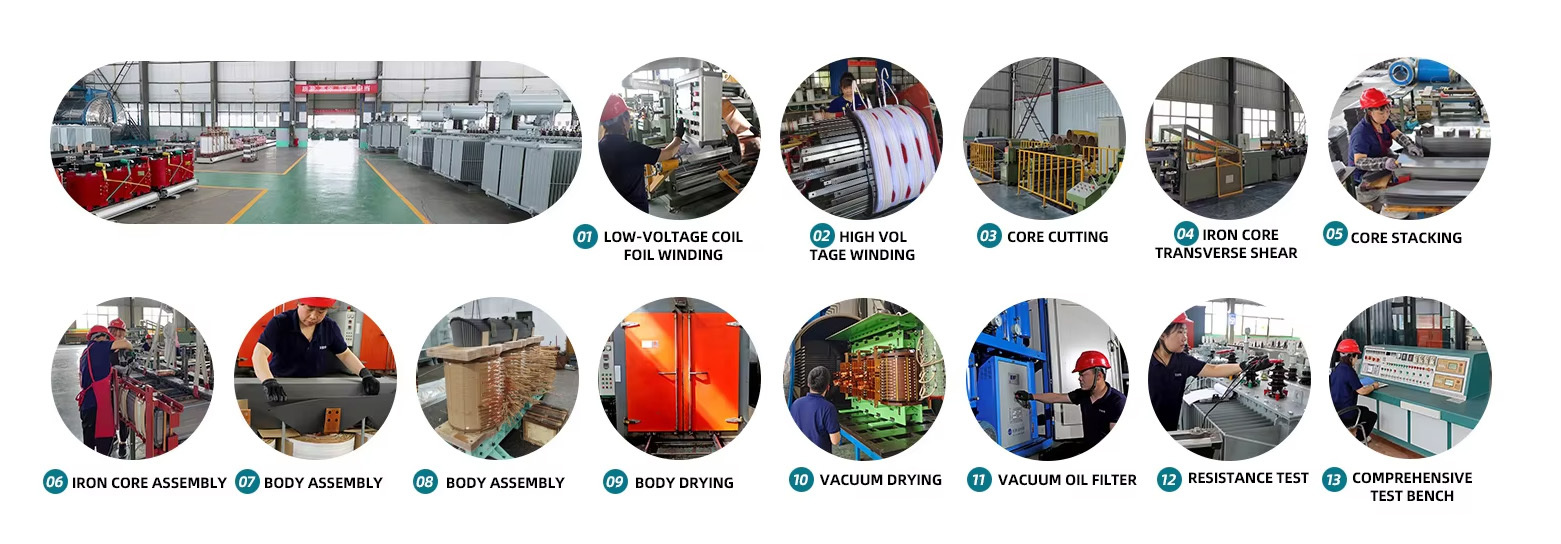
Production proces
Customer Case

Cooperation Partners

Our Exhibition

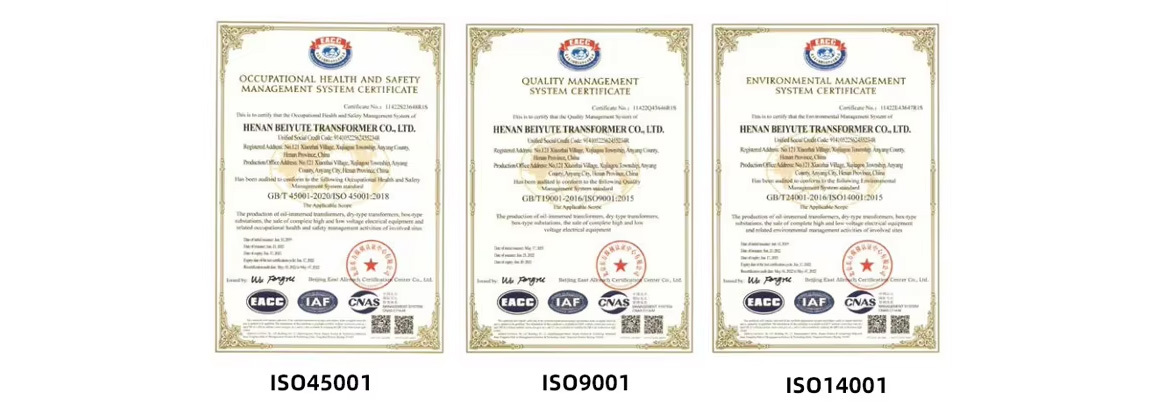
Our Certificates
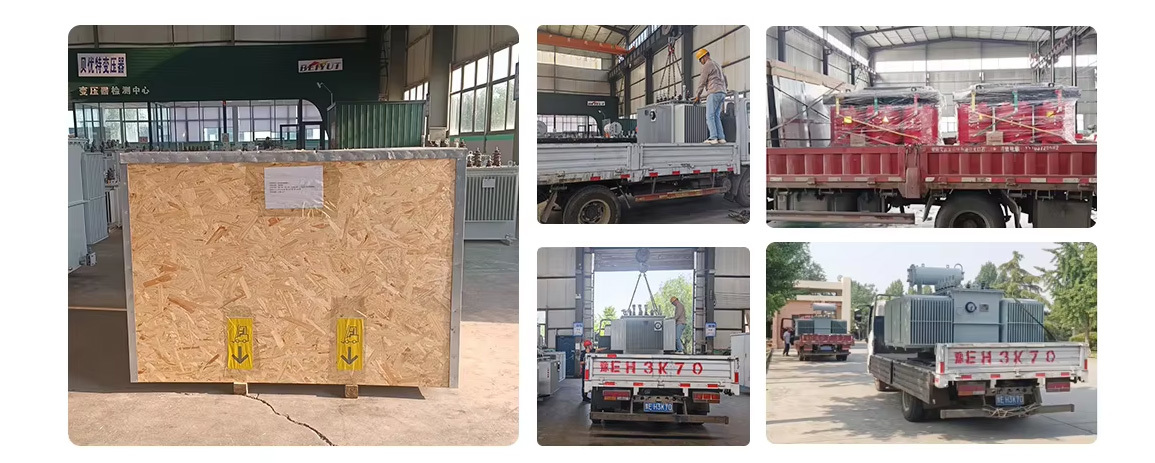
Payment & Delvery
FAQ
Q1. What is the primary function of a three-phase oil immersed transformer?
The primary function is to convert high voltage electricity to lower voltage levels for safe distribution and use.
Q2. How does oil contribute to the performance of transformers?
Oil acts as both an insulator and a cooling medium, helping to dissipate heat and protect winding materials.
Q3. What are the benefits of using biodegradable insulating oils?
Biodegradable oils reduce environmental impact and are safer for the ecosystem in case of leakage.
Q4. How often should maintenance be performed on these transformers?
Regular inspections and maintenance should be conducted at least once a year, along with oil quality testing.
Q5. Can three-phase oil immersed transformers be used in renewable energy applications?
Yes, they are suitable for various applications, including renewable energy systems, to ensure efficient energy conversion and distribution.
Key words:
Oil Immersed Transformer
20-24kV
15000V to 400V
22kV Oil-Immersed Transformer
15kV three-phase oil-immersed transformer
Previous:


Leave a message
Leave your contact information and we will contact you during business hours


Phone/WhatsApp:
Email:
Address
Kaibeite Industrial Park, No. 121 Xiaozhai Town, Anyang, Henan Province, China
HUATAO GROUP
Leave Message
Expand your business with a trusted partner